
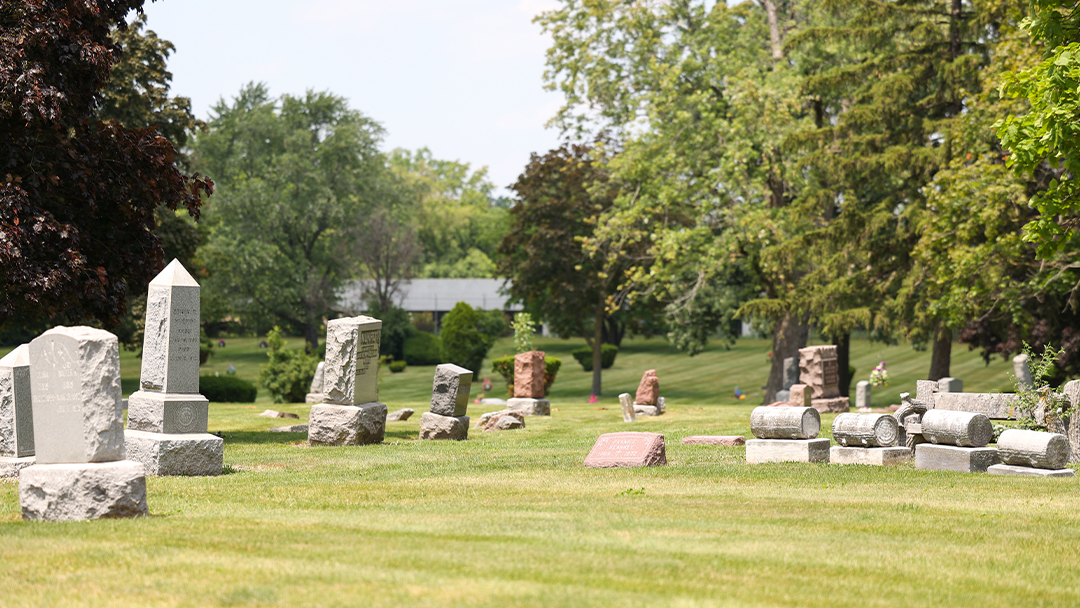
There are several ways to mark a gravesite, and the terminology can be confusing because people often use the terms interchangeably. You might not know that each type of headstone has its own name, but they do, and that’s just one of the differences between them.
They all serve the same purpose of marking a gravesite and honoring those within, but each has unique features that set it apart. Knowing these details can make it easier to decide or honor your loved one’s wishes during an already hard time.
What Are Headstones, Grave Markers, and Monuments?
No matter the type, headstones, grave markers, and monuments all serve the same purpose: to show where someone is buried so family and friends know where to return. The differences between them can help you understand when each type should be used to help you make the right choice when planning your loved one’s burial or preplanning your own.What Is a Cemetery Memorial?
A cemetery memorial is the umbrella term for any physical tribute created to honor and remember someone who has died and is buried in that cemetery. It includes all types of headstones, grave markers, and monuments, as well as plaques, cremation niche fronts, and benches. These days, memorial options go far beyond a traditional headstone.What Is a Headstone?
A headstone is a memorial traditionally placed at the head of a grave, which is where the name comes from. Like other markers, it has the name and relevant dates etched, but can also include inscriptions, decorative carvings, or artwork. This term refers to an upright memorial, typically made of granite, but it can also include markers that sit lower to the ground. A headstone is a category of memorials that are available in flat, slanted, and upright forms.What Is a Grave Marker?
A grave marker, or flat headstone, is a memorial that lies flat at the head of a burial site to identify the person buried there. However, they can also be slightly angled. They are most commonly inscribed with the person’s name and birth and death dates but can also include a small emblem or design to make it more personal.What Is a Cemetery Monument?
A cemetery monument is a larger, more prominent memorial. Monuments are typically upright granite structures set on a base, and their size allows for longer inscriptions, multiple names, carved artwork, and personal details that wouldn’t fit on a smaller stone. That extra space is why monuments are often chosen to remember a couple or several family members, though they can honor a single person as well. The difference between a headstone and a monument is the size and scale. Every monument marks a grave, but not every headstone is large enough to be called a monument.What Are the Different Types of Headstones and Grave Markers?
Most headstones and grave markers fall into one of these four styles, and the options available to you depend on the cemetery’s regulations and the section where the burial space is located.- Flat, or flush, markers have a smaller profile and are level with the lawn.
- Beveled markers are slightly raised and have a gently sloped top, which can make the inscription easier to see while maintaining a low profile.
- Slant headstones are taller and have an angled face that’s easy to read for those standing above it.
- Upright monuments are classic vertical stones with room for double inscriptions.
Can Memorials Be for More Than One Person?
Cemetery memorials can also be categorized by who they’re for.- Individual memorials are made for a single burial space and are the most common option.
- Companion memorials are a single stone or plaque across two side-by-side spaces
- Double-interment memorials are for single gravesites where two people are buried above one another.
- Infant memorials are sized for infant burial spaces.
How to Choose the Right Type of Cemetery Memorial
Once you understand the different terms, you’ll be able to move through the process of purchasing a headstone more easily but knowing the type you want isn’t the only thing you’ll need to consider.Start With the Burial Space and the Cemetery’s Guidelines
Many cemeteries, like ours, have sections that are for specific memorial styles, like a columbarium garden for cremations or a veteran’s garden, while others mix upright headstones and monuments. Your chosen cemetery may also have specific guidelines for what can go on certain lawn burial and cremation spaces, including limits on size, material, and installation.Think About Appearance and Placement
Once you know what’s appropriate for the burial space, consider what you want it to say and look like, since some spaces offer more room or customization options than others. Your loved one’s memorial is what marks their place in the cemetery, and it’s a focal point for you when you visit, so if you want to be able to read it while standing or want certain personalization aspects, consider those when designing it.Finding a Memorial That Honors Your Loved One
Knowing the difference between a headstone, a marker, and a monument is a useful starting point, but it isn’t really the heart of the decision. The memorial you choose is where people will come to talk, to sit quietly, or to bring flowers. The best choice is one that both fits the person and how your family wants to remember them, whether that’s a bronze plaque or a more ornate monument.
No single style is right for everyone, and you don’t have to sort out the vocabulary on your own. Our memorial team works with families across Troost Cemeteries’ nine properties.
Contact your preferred location with any questions about available memorial options.